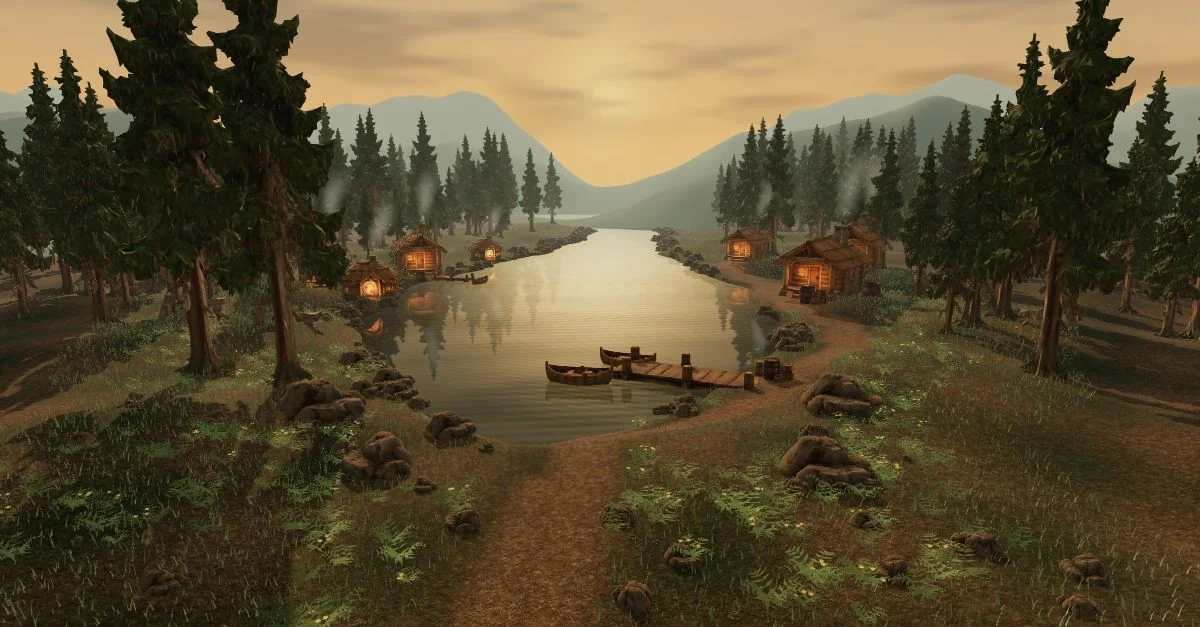
Somewhere
by the water.
Pines, timber, and the last light of day.
BEHIND THE SHORE · REFERENCE ASSET COMPILER
One reference.
Seven assets.
A little world.
Stillwater is a working demonstration of Reference Asset Compiler: a project for turning reviewed AI assets into traceable, verifiable 3D deliverables.
Created by Mark Hall with Codex, using local AI generation and the project’s asset workflows.
Explore the code & documentation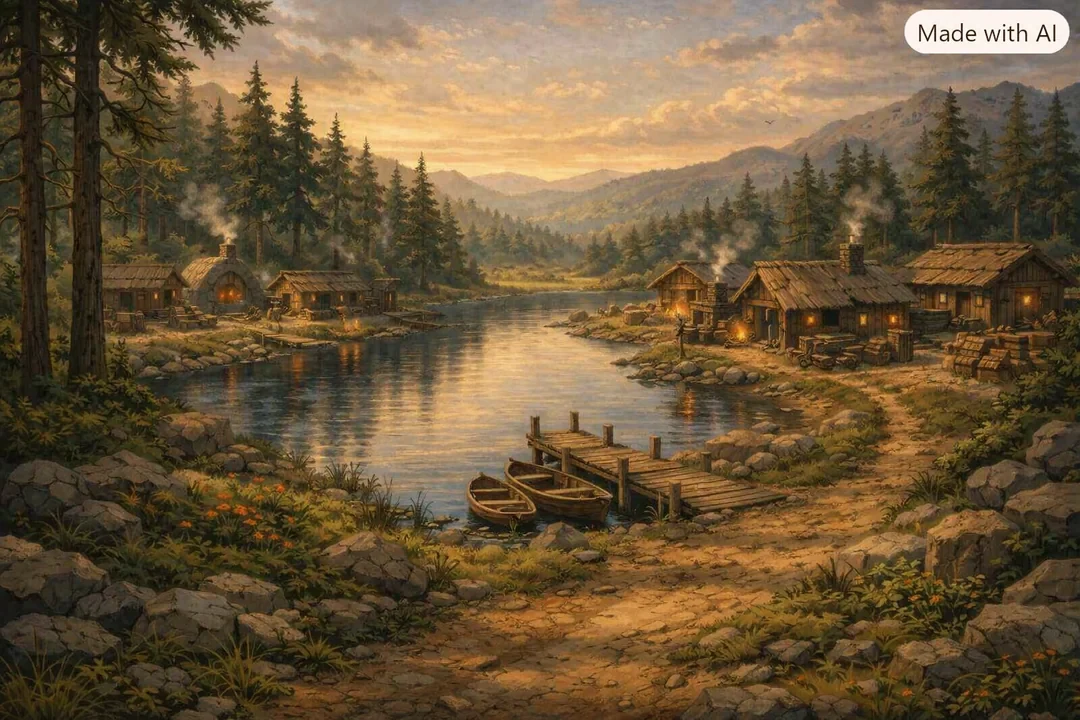
How I made the models
Each object was built separately, then brought into the same world.
-
01
Isolate the reference
Starting from the village image, I used AI image generation to create seven separate object references: two cottages, a pine, a dock, a rowboat, shore stones and supplies.
IMAGE GENERATION -
02
Generate the shape
Each reference directly conditioned Hunyuan3D-2, running locally on an RTX 4090. It produced an independent mesh for each asset; unseen sides were inferred from the image.
HUNYUAN3D-2 · LOCAL GPU -
03
Clean up & review
Blender reduced polygon counts, removed stray geometry and prepared UVs—the layout used to wrap textures around a mesh. Front, quarter, side and back views were reviewed before painting.
BLENDER · SHAPE & UV REVIEW -
04
Paint & assemble
Hunyuan3D-Paint 2.1 added reference-conditioned, physically based (PBR) materials to the approved meshes. I then assembled them in Three.js, adding terrain, water, light, smoke and the independent asset viewer.
HUNYUAN3D-PAINT · THREE.JS
WHAT THE PROJECT CONTRIBUTES
The workflow behind the view.
The repository connects the generation and review steps; the compiler normalizes, checks and packages accepted assets. It preserves source hashes, candidate history, review receipts and validation results so the delivered files can be traced back to their inputs.
For Stillwater, all seven final GLBs were checked for UVs, embedded textures and preserved geometry after painting, then accepted for this demo. Select an asset above to rotate it, inspect its wireframe, compare its source image or download the GLB. Three.js loads these finished 3D files directly in your browser; all AI generation happened beforehand. The browser uses lighter textures for faster loading; GLB downloads retain the original full-resolution materials.