Making Clanker Heroes, one broken knight at a time
How I built and shipped a clockwork adventure in four days with Unreal Engine, AI agents, and two tools of my own.
From November 12 to 15, the 2026 Epic AI MegaJam gave developers four days to turn the theme Director’s Cut into a playable game in Unreal Engine or Unreal Editor for Fortnite. Teams could have up to five people and as many AI agents as they liked. We could prepare our tools in advance, but game development had to start with the jam. We had to declare earlier work and list any third-party assets we used. For the Unreal Engine track, we owed Epic a packaged game and 30 to 60 seconds of gameplay footage. Epic’s jam rules
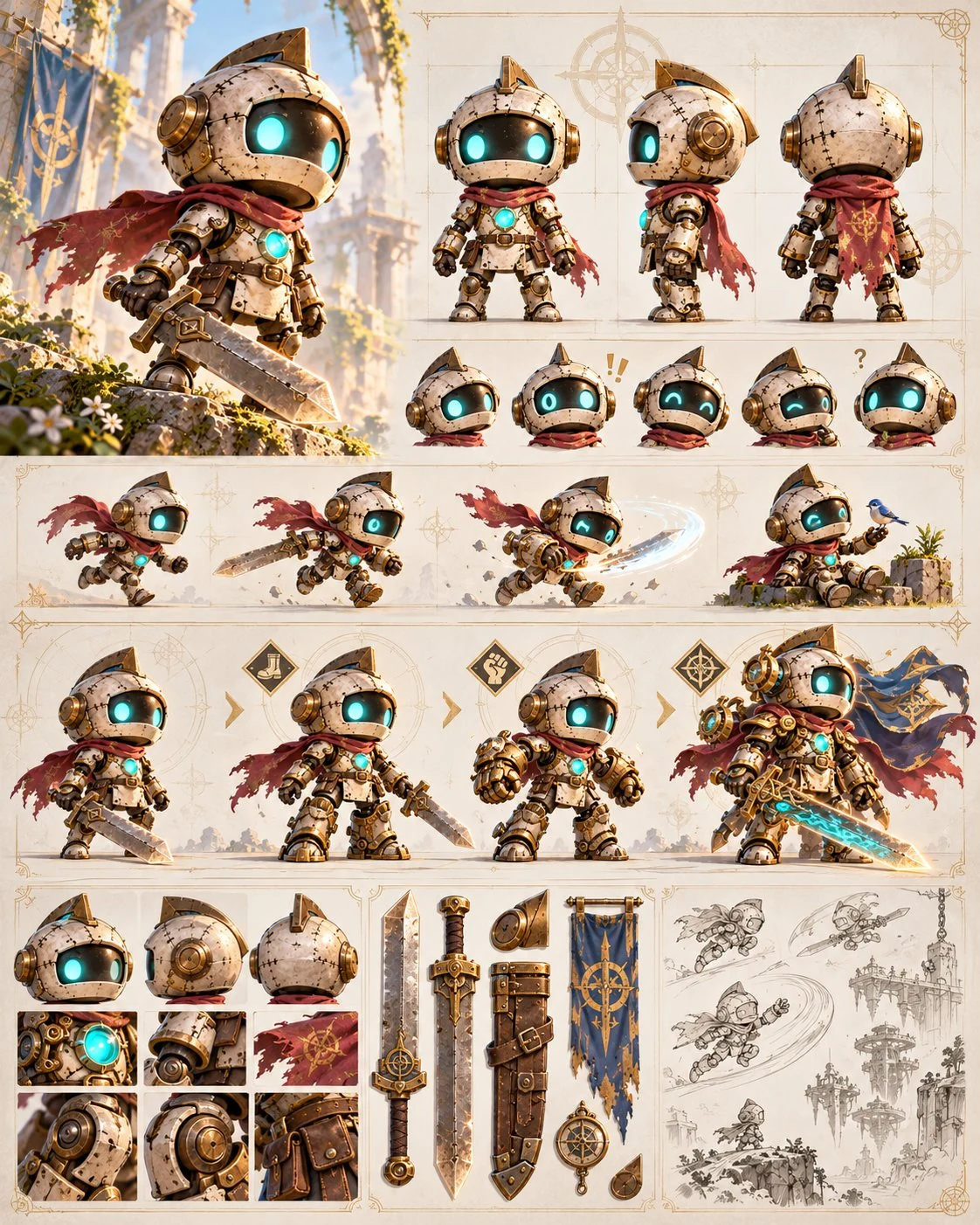
I entered solo and shipped Clanker Heroes, a Windows action-platformer about a spark that pilots a clockwork knight through a forgotten toy workshop. Each beacon you light brings another room back to life. I designed the game, directed Claude and Codex on code, art, levels, and sound, and playtested the builds. I used two tools I’d built, Framewright and Reference Asset Compiler, to get the characters and props from concept art into Unreal.
Somewhere worth coming back to
I wanted to blur the line between a platformer and an RPG. The part of Astro Bot I wanted to capture was the impulse to turn around and jump on something a second time just because of what it did the first time. That’s how a bell and a spring drum earned their places in my workshop. I even wrote myself a test. Put a new player in a room with no enemies for thirty seconds. Could I get a laugh out of them with just the things they could touch?
Hades got me thinking about what happens after a bad run. I liked having somewhere familiar to come home to and a reason to head out again. I wanted the choices you make in an RPG to matter while your thumbs were still doing platformer things. The Sky Boots were one way to put the two together on paper. You find a piece of gear, bolt it onto the knight, and suddenly a ledge you could see is a ledge you can reach. Even if you wreck that knight, the next one gets the boots.
My October 22 draft was called The Workshop of Lost Heroes. It already had a golden spark, a disposable robot body, and a junk heap that could become a home. That separation between the spark and the shell solved a design problem for me. I could let you lose the weapon you’d built a run around and still have you come home as the same little person.
From a pitch to a build bible
I worked through the idea by writing down what a player would actually do in one room, what they’d carry into the next, and what they’d keep when they died. In the first draft, a chest offered two cards and you could hold two. By the November build bible I’d settled on a slot each for a weapon, an ability, and a passive core. A room reward could change the knight for that run. Salvage bought permanent improvements back home. That gave me room for different builds without asking anyone to spend the afternoon in a menu.
There was a story question in those notes, too. What happens to an imaginary friend when the kid who dreamed it up grows older? I’d always felt for the dragon left waiting in Puff, the Magic Dragon. In my workshop, the grown-up misses that place too. That’s where Ember got a job bigger than upgrading a suit of armor. A little flame could bring a forgotten room back to life.
The document that came out of this was Clanker Heroes — Build Bible & Concept Art. I kept the early pitch alongside the current design and the visual references. For the first night, the bible called for one plain room. Get the jump and camera feeling right in there, then make a wave of color roll across it. I kept revising the bible during the jam. On Saturday I replaced the cages where you freed lost sparks with cold beacons. You were already carrying a flame. Letting Ember light the room made sense the moment you saw it.
From concept art to the game
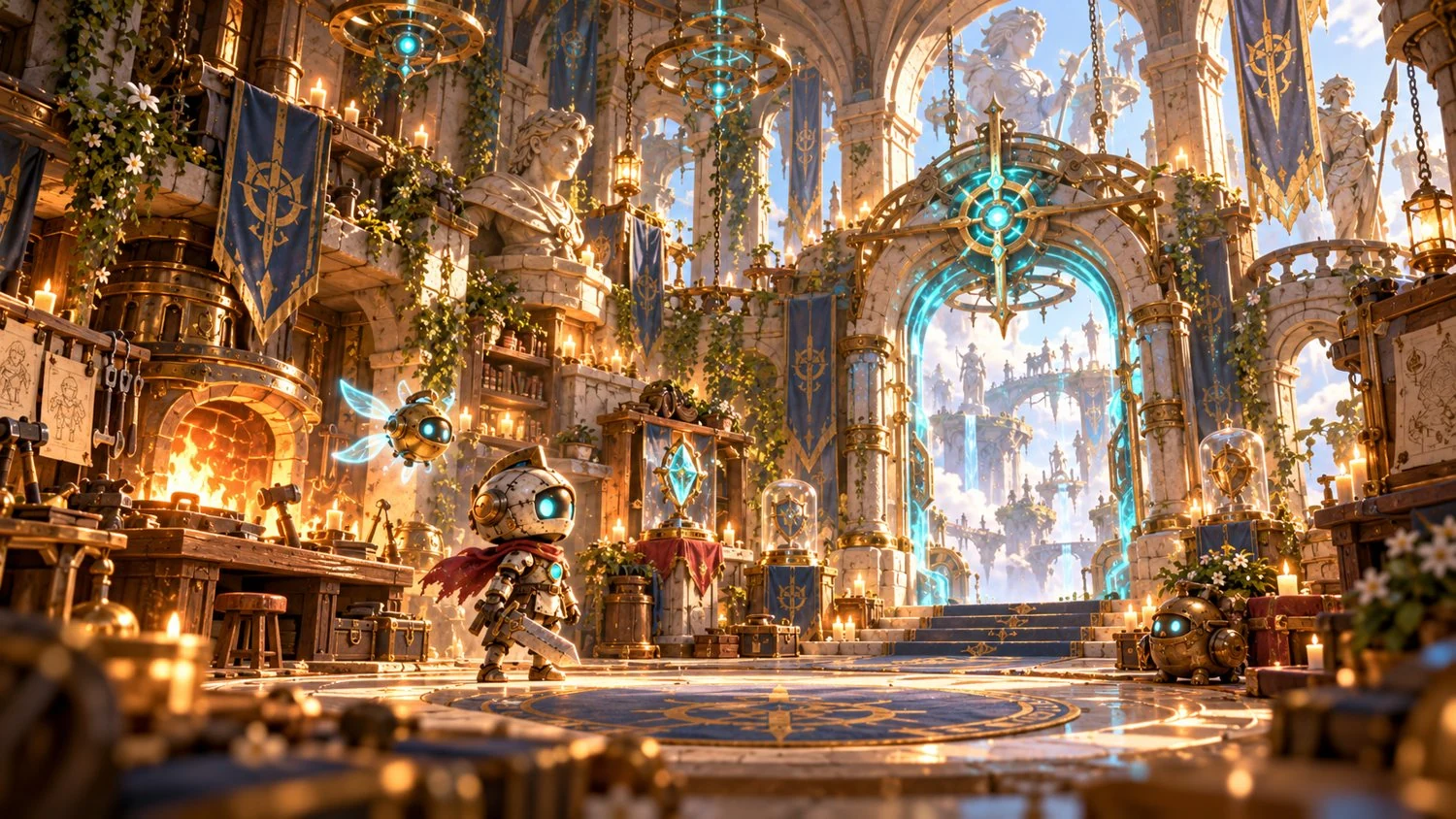
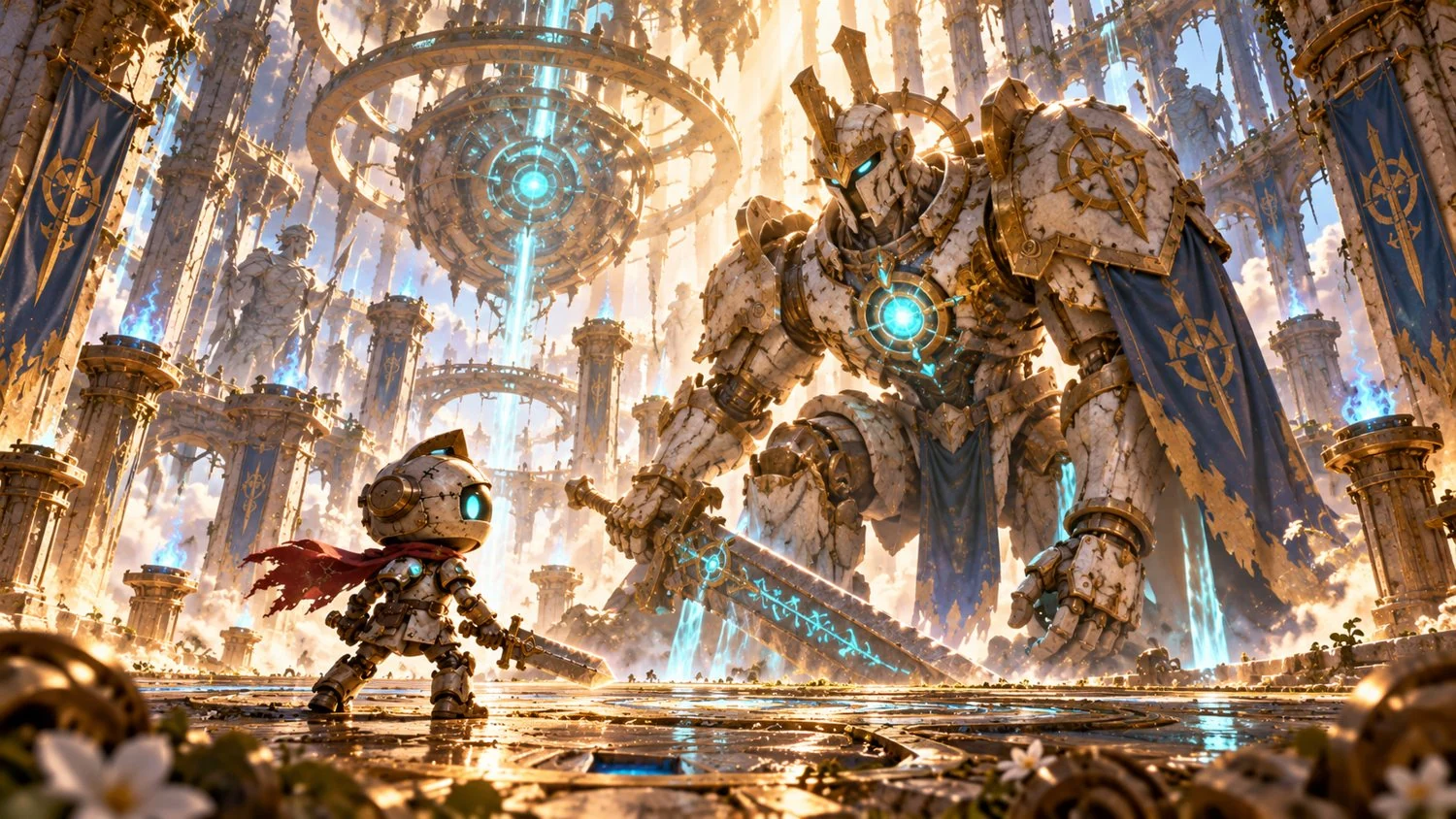
These drawings come from the October pitch, back when I was still calling the game The Workshop of Lost Heroes. Select any image for the full view.
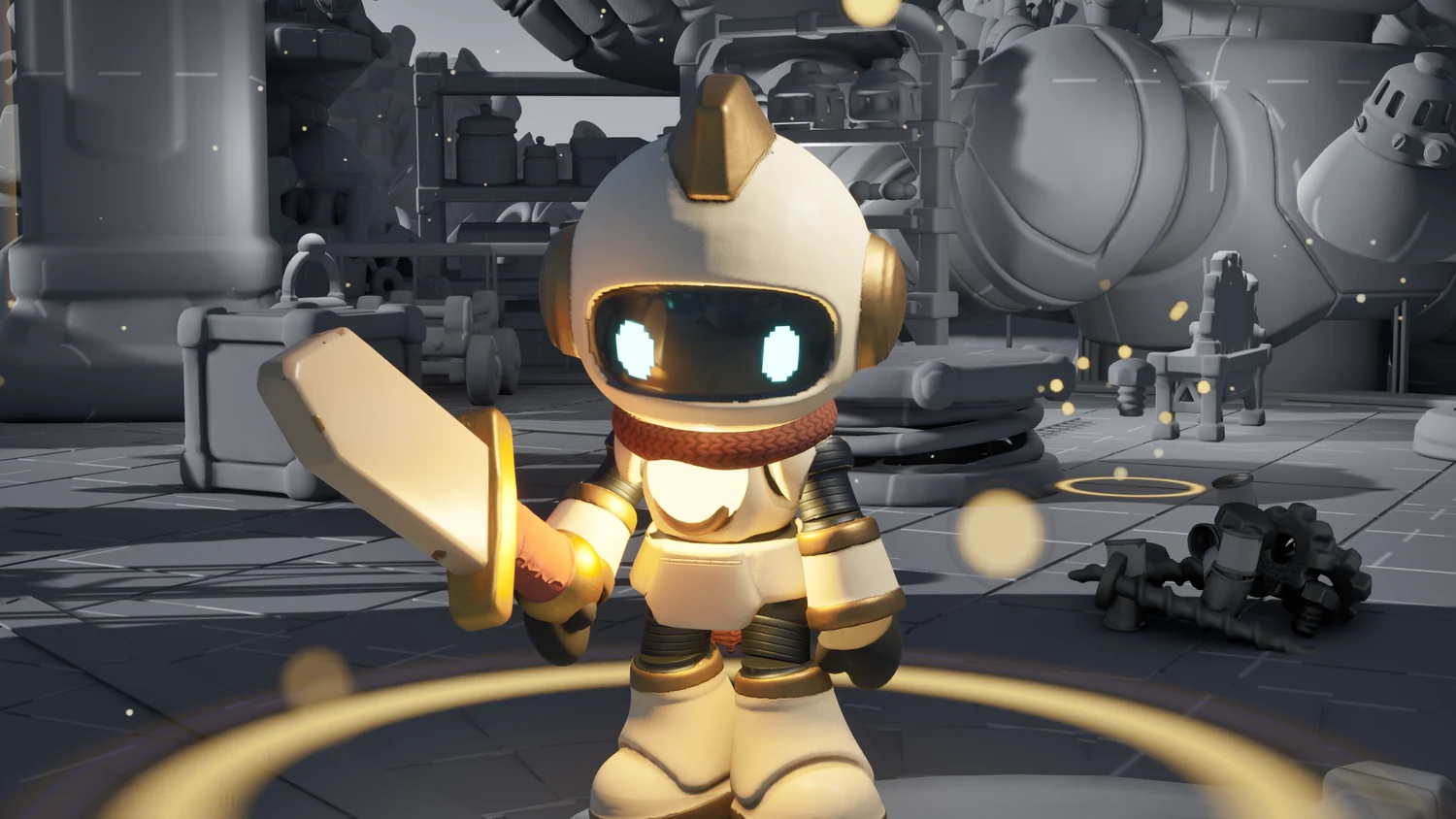
The knight
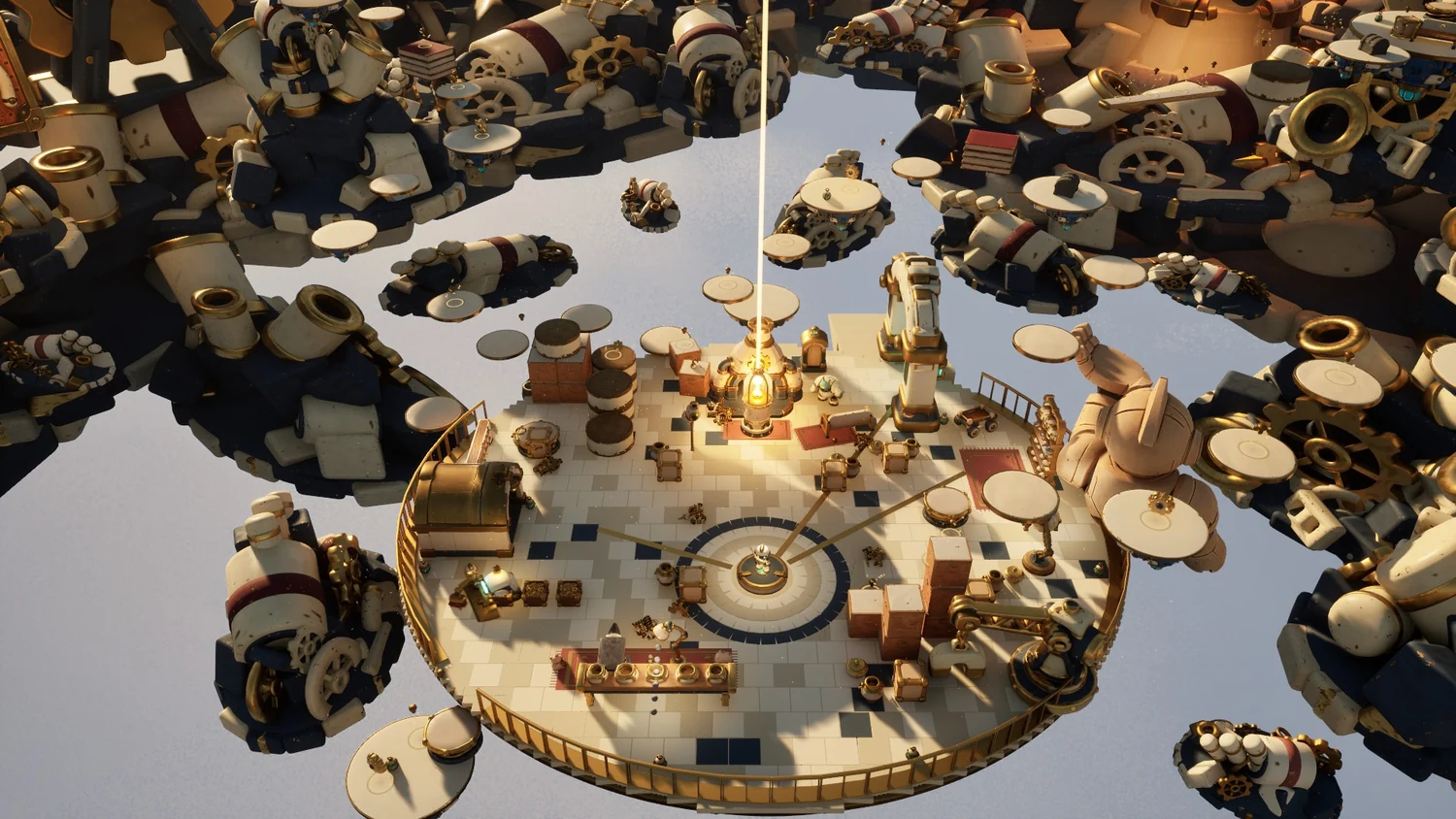
The scrapyard
The Warden
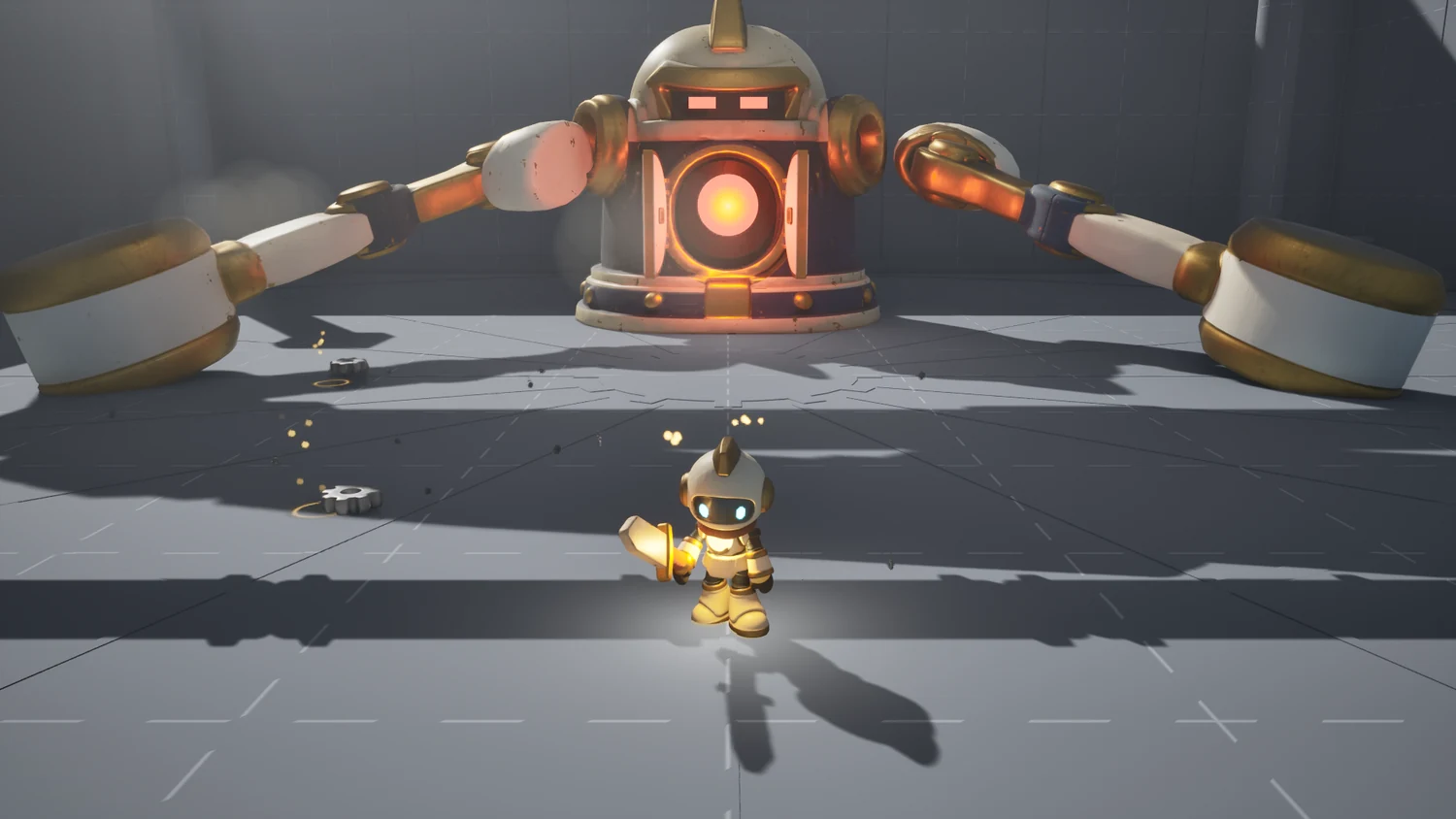
What a spark can do
When your knight falls apart in Clanker Heroes, a little tractor named Sweep rushes over with a broom. You get a moment to watch him clean up your remains. You’re still there, hovering over his shoulder, because the part of you that matters is a small orange flame. Sweep can have the armor.
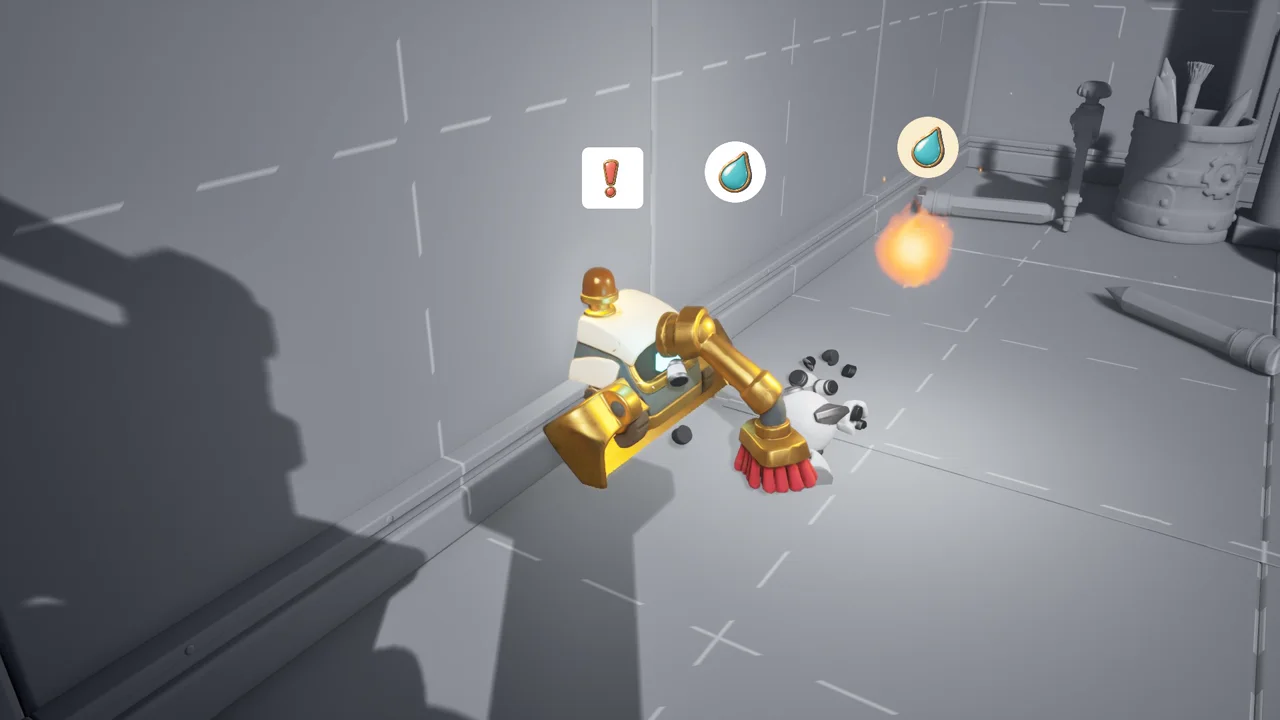
A perfectly ordinary workday for Sweep.
You start as Ember on a junkyard island above the clouds. There’s an empty clockwork knight slumped on the plaza. Fly into it and light comes through the joints. Now you’ve got feet, a sword, and somewhere to be. The island’s beacon has gone cold.
Lighting it sends a wave of color across the paving and up the scrap heaps. Beyond the portal is the Tangleworks, an old toy workshop with six rooms to wake up. Along the way you can ring a bell, bounce off a spring drum, or land both metal feet on a Sentry’s head. If the knight breaks, Ember floats home and a fresh shell assembles around the flame. You can spend the salvage from the run at the workbench before you head out again.
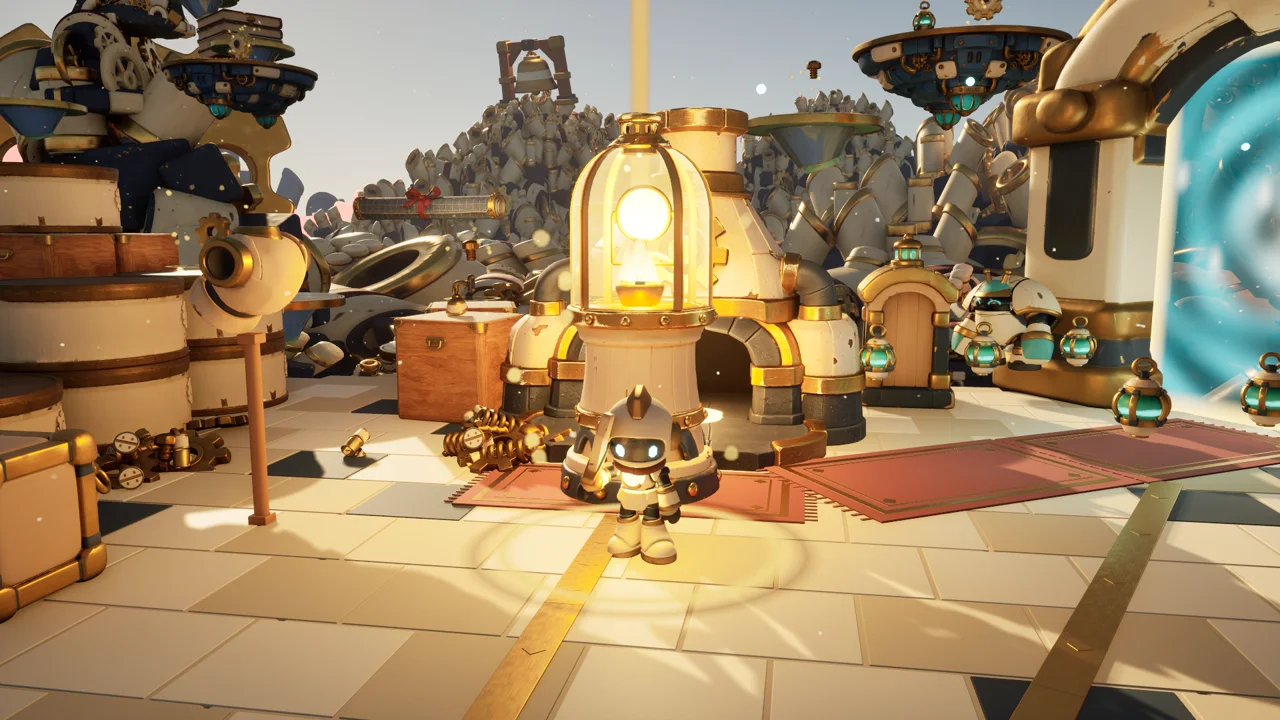
The landing after you light the first beacon. A minute ago, almost everything here was gray.
What I brought to the jam
When the jam opened at 10 p.m. Mountain on Wednesday, I had a design bible, a list of assets to build, prompts for the agents, and two open-source tools I’d written. Reference Asset Compiler (RAC) was how I could turn a drawing into a model on my own machine. Framewright was where I could turn that model around, compare revisions, and decide whether it belonged in the game.
I bought no premade assets for Clanker Heroes. Every original asset in the submitted game was made during the competition. That includes the characters, props, icons, sound effects, and all four pieces of music. Unreal supplied some familiar building blocks. We adapted its mannequin animations for the knight and the Sentry, used its cloud material and noise textures for the sky, and kept its Roboto font and engine logo. We used no Fab, Marketplace, or Quixel content.
Which jobs went to Rodin?
Take the junkyard around the landing. Somebody had to make the bent gears, buckets of bolts, and oil cans that make it look like a place where a little tractor might actually find work. Codex used GPT Image to make concept art from my briefs, then sent references to Hyper3D Rodin, a hosted image-to-3D service. Rodin generated most of the game’s 3D models, including much of that scenery, the Sentry’s body, and the beacon lighthouse. The Rodin credits paid for generating new models from our references during the jam.
On my PC, RAC ran Hunyuan3D to build shapes and paint textures. The knight himself came through that pipeline, from his body to the skeleton that moves it. Across the jam, RAC ran 70 jobs covering 63 props. A job could be technically successful and still miss the brief. One brief called for a squat brass pot with three feet. Two local attempts gave it five. That’s when I sent the same drawing to Rodin.
The Sentry used both routes. Rodin supplied the armored body. Back on my machine, Codex used RAC and Blender to rig it as 14 rigid pieces. Each piece followed one bone, so lifting an arm moved the armor plate in one piece. We could then fit Unreal’s animations to that skeleton and use the same body for the hostile Sentry and the friendly guard at the gate.
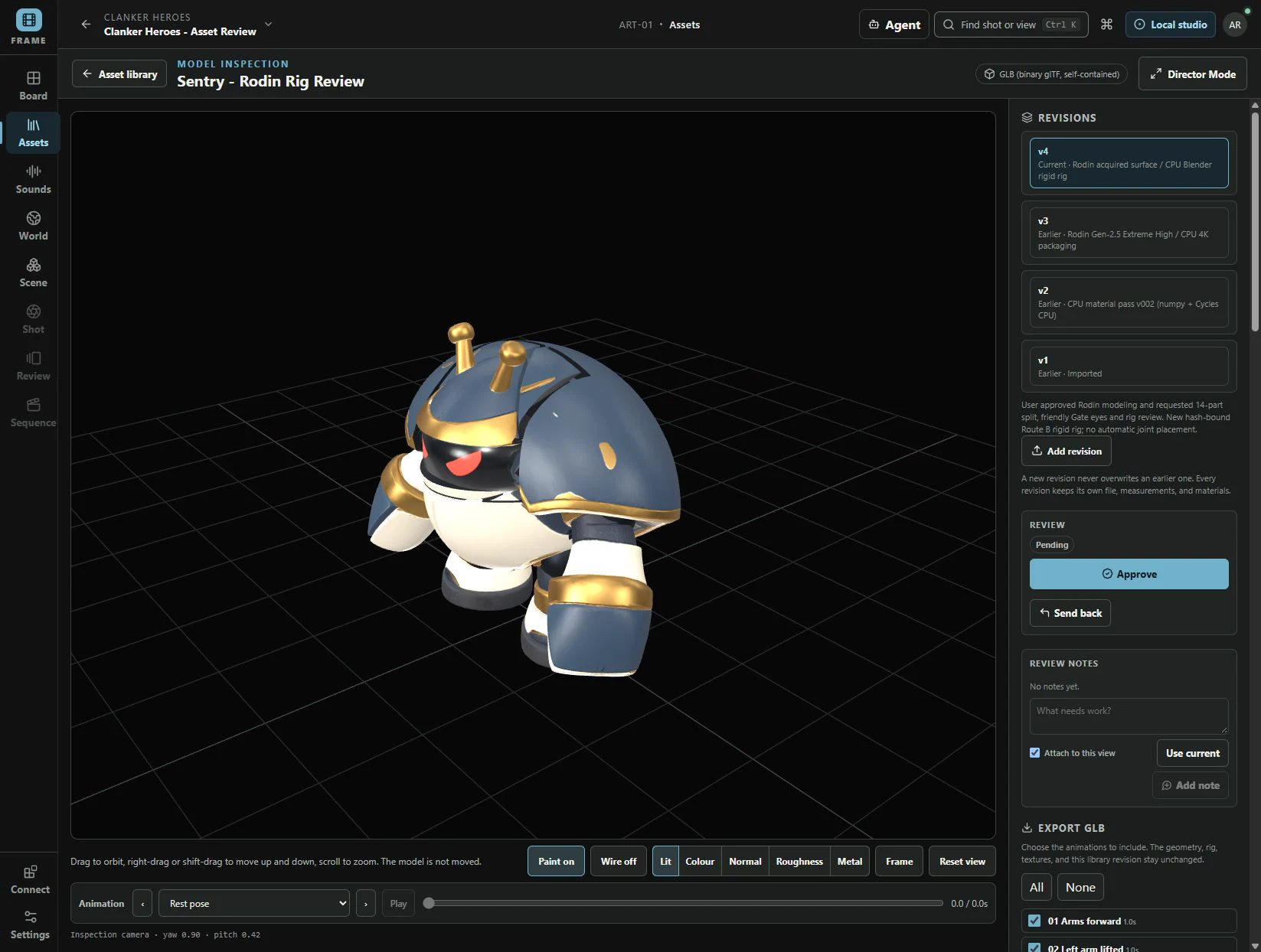
The Sentry in Framewright, waiting for my rig review. Rodin made the surface. The revision on screen has the rig we built locally.
How a model earned its way into Unreal
In Framewright I could open two revisions of an asset, inspect the geometry and materials, then approve one or send it back with a specific change. The Unreal import scripts picked up the revision I’d approved. Across the jam, Framewright recorded 315 revisions for 166 distinct models. I sent 27 revisions back for another pass.
The glass beacon on the landing is a good example of why I wanted that step. You spend the game putting a flame inside a lamp. You ought to be able to see the burner. We kept the Rodin model and repaired the glass and chimney in Blender on my machine, without spending another Rodin credit. I approved that version in Framewright. In Unreal we moved the flame onto the burner and lit it on the plaza. That let you see Ember burning inside the glass from the plaza.
Both tools changed under the pressure of using them. Codex added rigid-part binding to RAC for the clockwork characters. Claude added revision comparison and keyboard shortcuts to Framewright. By the time I was looking at the hundredth model, an approve key was a very welcome feature. Framewright on GitHub · Reference Asset Compiler on GitHub
What the workshop sounded like
The audio ran on my own GPU. MOSS-SoundEffect generated 227 takes. I listened in Framewright’s Sounds page and picked the 86 effects that went into the game. For the score, we gave YuE2 one melody written in ABC notation and a different style prompt for the landing, dungeon, boss, and ending. I auditioned the music from audio files. Once I’d picked the takes, the scripts cut them into loops and matched their volume.
While checking the session logs, we found that the tune playing at the landing came from a test of the music tools a few hours before the jam opened. We retired it. YuE2 generated five takes of a new piece, Workshop of Wonders. I picked the first. If you stand at the landing and listen, there’s a quiet winding clock underneath it. That sound was synthesized for the game, too.
Putting it all together
While the art was in review, Claude Code sessions worked in separate Git worktrees on C++, HUD and menus, lighting, room layouts, and packaging. Each session committed its work and left a handoff in a shared status file. When one session hit its usage limit, Codex could pick up the remaining branches, integrate the hub music, and package the Windows build.
I still played it myself. An automated run could beat the Warden and relight its heart. When I walked up to the defeated boss in the submitted build, the screen never offered me the E prompt. The ending had hidden the HUD, including the instruction I needed to start it. We fixed it and checked the prompt from seven spots around the Warden. The next time I test an ending, I’m walking up to the boss from the wrong side first.
Clanker Heroes is free for Windows. If you’d like to meet Sweep, he’s on the clock. Download the game on itch.io or watch the gameplay trailer.
For the build notes, I’ve put the tools, credits, and testing details in the development log. You can also find the original MegaJam entry.